











เอสซีจี แชร์มุมมองบนเวที “Sustainability Week Asia 2026”
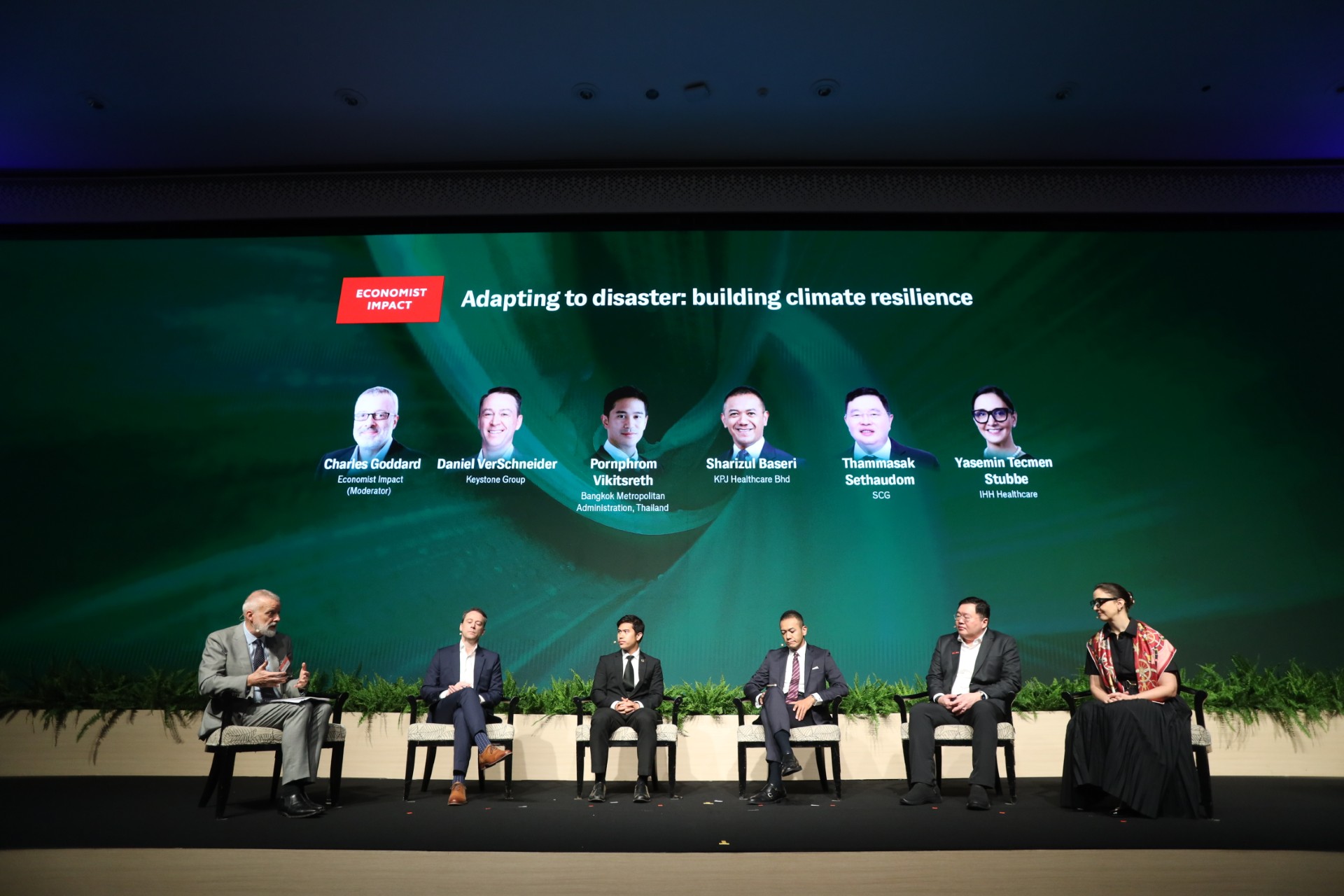
เอสซีจี แชร์มุมมองบนเวที “Sustainability Week Asia 2026”ชี้ “Climate Adaptation” กุญแจสร้างความยืดหยุ่นให้ธุรกิจและประเทศ ท่ามกลางวิกฤตโลกรวน
กรุงเทพฯ, 27 มีนาคม 2569: เอสซีจี ร่วมแลกเปลี่ยนมุมมองบนเวที “Sustainability Week Asia 2026” ในหัวข้อ “Adapting to Disaster: Building Climate Resilience” โดยย้ำว่าวิกฤตโลกรวนกำลังเป็นความท้าทายสำคัญที่ส่งผลโดยตรงต่อภาคธุรกิจและเศรษฐกิจประเทศ การขับเคลื่อนด้วยการลดการปล่อยก๊าซเรือนกระจก (Climate Mitigation) อย่างเดียวอาจไม่พอ แต่ต้องเร่งปรับตัวต่อการเปลี่ยนแปลงสภาพภูมิอากาศ (Climate Adaptation) ควบคู่กัน รวมถึงเสริมความยืดหยุ่นด้านการบริหารจัดการน้ำ (Water Resilience) ด้วยแนวคิด Dual-Use Infrastructure เพื่อให้ธุรกิจและประเทศรับมือความเสี่ยงจากสภาพภูมิอากาศที่รุนแรงขึ้น และรักษาความสามารถการแข่งขันได้ในระยะยาว
นายธรรมศักดิ์ เศรษฐอุดม กรรมการผู้จัดการใหญ่ เอสซีจี กล่าวว่า “สำหรับภาคธุรกิจ โดยเฉพาะอุตสาหกรรมขนาดใหญ่อย่างเอสซีจี วิกฤตสภาพภูมิอากาศไม่ใช่เพียงประเด็นสิ่งแวดล้อมอีกต่อไป แต่เป็นความเสี่ยงทางธุรกิจโดยตรง ทั้งต่อการผลิต การบริหารจัดการทรัพยากร และห่วงโซ่อุปทาน ดังนั้นเอสซีจีจึงต้องขับเคลื่อนควบคู่กัน ทั้งการลดการปล่อยก๊าซเรือนกระจกตาม Net Zero Roadmap และการเสริมความยืดหยุ่นให้ปรับตัวและแข่งขันได้ภายใต้ความผันผวนที่รุนแรงขึ้น โดยเครื่องมือสำคัญ คือ การบริหารความต่อเนื่องทางธุรกิจ (Business Continuity Management: BCM) ซึ่งเรานำมาใช้ประเมินความเสี่ยงที่ต่างกันตามบริบทของพื้นที่ (Area-Based Risk Assessment) วิเคราะห์และจำลองสถานการณ์ที่อาจเกิดขึ้น (Scenario Analysis and Simulation) เพื่อให้ธุรกิจเดินหน้าต่อได้ทุกสถานการณ์ โดยองค์กรที่พร้อมรับมือการเปลี่ยนแปลงสภาพภูมิอากาศมากกว่า ย่อมมีศักยภาพมากกว่าในการเปลี่ยนความเสี่ยงให้เป็นโอกาสทางธุรกิจ
นายธรรมศักดิ์ กล่าวเพิ่มเติมว่า “ไม่เพียงภาคธุรกิจเท่านั้น วิกฤตสภาพภูมิอากาศยังส่งผลกระทบต่อเศรษฐกิจประเทศและคุณภาพชีวิตของประชาชน สำหรับประเทศไทย ‘น้ำ’ ถือเป็นทรัพยากรสำคัญต่อหลายภาคส่วน ไม่ว่าจะเป็นภาคอุตสาหกรรม พลังงาน เกษตรกรรม การขนส่ง การท่องเที่ยว ตลอดจนการดำรงชีวิตของประชาชน ขณะเดียวกันประเทศไทยกำลังเผชิญความเสี่ยงด้านน้ำที่รุนแรงขึ้น ทั้งน้ำท่วมและภัยแล้ง การเสริมสร้างความยืดหยุ่นด้านการบริหารจัดการน้ำ (Water Resilience) จึงเป็นเรื่องเร่งด่วนที่ต้องอาศัยความร่วมมือจากทุกภาคส่วน เพราะการเตรียมพร้อมตั้งแต่วันนี้ คือรากฐานสำคัญของความมั่นคงในอนาคตของประเทศ เอสซีจีจึงสนับสนุนแนวคิด Dual-Use Infrastructure หรือการออกแบบโครงสร้างพื้นฐานให้สามารถใช้ประโยชน์ได้ทั้งในภาวะปกติและในยามเกิดภัยพิบัติ เพื่อเสริมความพร้อมและความยืดหยุ่นของประเทศในอนาคต”
“ภายใต้สภาพภูมิอากาศแปรปรวนสุดขั้ว การปรับตัวไม่ใช่ทางเลือกอีกต่อไป แต่เป็นเงื่อนไขของการอยู่รอดและเติบโตในระยะยาว” กรรมการผู้จัดการใหญ่ เอสซีจี กล่าวทิ้งท้าย
ทั้งนี้ 5th Annual Sustainability Week Asia โดย Economist Impact เป็นเวทีด้านความยั่งยืนระดับเอเชีย จัดขึ้นภายใต้ธีม “From Idealism to Pragmatism” เพื่อแลกเปลี่ยนความคิดเห็น มุมมองเชิงลึก และแนวทางแก้ไขปัญหาที่นำไปใช้ได้จริง เพื่อเร่งการเปลี่ยนผ่านสู่ Net Zero และขับเคลื่อนความร่วมมือด้านสภาพภูมิอากาศ การลงทุน และการพัฒนาเทคโนโลยีเพื่อความยั่งยืน ปีนี้จัดขึ้นระหว่างวันที่ 25 – 26 มีนาคม 2569 ณ โรงแรม ดิ แอทธินี กรุงเทพฯ โดยมีผู้นำทางธุรกิจ ผู้กำหนดนโยบาย ตัวแทนจากองค์กรระหว่างประเทศ และผู้เชี่ยวชาญด้านความยั่งยืนทั่วเอเชียเข้าร่วมงาน

SCG Highlights “Climate Adaptation” as Key to Resilience for Businesses and Nations at Sustainability Week Asia 2026
Bangkok, 27 March 2026 – SCG shared its perspective at Sustainability Week Asia 2026 during the session “Adapting to Disaster: Building Climate Resilience,” emphasizing that the climate crisis is becoming a critical challenge with direct impacts on businesses and national economies. Relying solely on climate mitigation is no longer sufficient. It is now essential to accelerate climate adaptation in parallel, while also strengthening water resilience through the concept of Dual-Use Infrastructure, to help businesses and countries better cope with intensifying climate risks and maintain long-term competitiveness.
Mr. Thammasak Sethaudom, President and CEO of SCG, said, “For the business sector, particularly large-scale industries like SCG, the climate crisis is no longer merely an environmental issue. It has become a direct business risk affecting production, resource management, and supply chains. Businesses must therefore move forward on two fronts simultaneously: reducing greenhouse gas emissions in line with their Net Zero roadmap, and strengthening resilience so they can adapt and remain competitive amid increasing volatility. A key mechanism in this effort is Business Continuity Management (BCM), that enables businesses to manage risk through Area-Based Risk Assessment, which enables businesses to assess location-specific risks, conduct Scenario Analysis and Simulation, and develop appropriate response plans to ensure business continuity under increasing climate volatility.”
Mr. Thammasak added, “The climate crisis affects not only the business sector, but also the country’s economy and people’s quality of life. In Thailand, water is a critical resource across many sectors, including industry, energy, agriculture, transportation, tourism, and everyday life. At the same time, the country is facing intensifying water-related risks, ranging from floods to droughts. Strengthening water resilience has therefore become
an urgent priority that requires collaboration across all sectors, because preparedness starting today is the foundation of the country’s future stability. SCG therefore supports
the concept of Dual-Use Infrastructure — designing infrastructure that can serve both everyday needs and emergency functions during disasters — in order to strengthen
the country’s preparedness and resilience for the future.”
“Under increasingly extreme climate conditions, adaptation is no longer optional; it is a condition for long-term survival and growth,” the SCG President and CEO concluded.
The 5th Annual Sustainability Week Asia, organized by Economist Impact, is one of Asia’s leading sustainability forums. Held under the theme “From Idealism to Pragmatism,”
the event serves as a platform for exchanging perspectives, deep insights, and practical solutions to accelerate the transition to Net Zero and advance collaboration on climate action, investment, and sustainable technology development. This year, the event took place on 25–26 March 2026 at The Athenee Hotel, Bangkok, bringing together business leaders, policymakers, representatives of international organizations, and sustainability experts from across Asia.
