













ผลประกอบการ SCG ไตรมาส 1 ปี 69 แกร่งขึ้น 17% จากช่วงเดียวกันของปีก่อน
ผลประกอบการ SCG ไตรมาส 1 ปี 69 แกร่งขึ้น 17% จากช่วงเดียวกันของปีก่อน
สู้วิกฤตตะวันออกกลาง คุมต้นทุน – มุ่งบริหารฐานผลิตอาเซียน – ดันสินค้ากรีน & ราคาคุ้มค่า & มูลค่าเพิ่มสูง
– เร่งศึกษาความเป็นไปได้ในการร่วมทุนเชิงกลยุทธ์ของธุรกิจโอเลฟินส์และพอลิโอเลฟินส์ในไทยระหว่าง GC และ SCGC
สร้างความ ‘แข็งแกร่ง’ ระยะยาว

กรุงเทพฯ – 30 เมษายน 2569: ผลประกอบการ SCG ไตรมาส 1 ปี 2569 มี Adjusted Cash EBITDA 14,929 ล้านบาท แกร่งขึ้น 17% จากช่วงเดียวกันของปีก่อน คาดสถานการณ์ตะวันออกกลางทำเศรษฐกิจโลกชะลอ ราคาพลังงาน วัตถุดิบผันผวนต่อ เร่งกลยุทธ์ “ระยะสั้น” บริหารต้นทุนวัตถุดิบ พลังงาน ดูแลลูกค้าต่อเนื่อง ด้วย Daily War Room ปรับตัวทันท่วงที พร้อมเดินหน้าวินัยการเงินเข้มข้น “ระยะ 2 ปี (2569-2570)” มุ่งสร้างความแข็งแกร่งระยะยาว บริหารความได้เปรียบจากฐานผลิตหลากหลายในอาเซียนใช้ Robotics & Automation เดินหน้าโครงการ LSPE เวียดนาม คืบหน้าตามแผน – ผลักดันสินค้ากรีน & ราคาคุ้มค่า & มูลค่าเพิ่มสูง – เร่งศึกษาความเป็นไปได้ในการร่วมทุนเชิงกลยุทธ์ของธุรกิจโอเลฟินส์และพอลิโอเลฟินส์ในไทยระหว่าง GC และ SCGC – ขับเคลื่อนธุรกิจพลังงานสะอาดครบวงจร

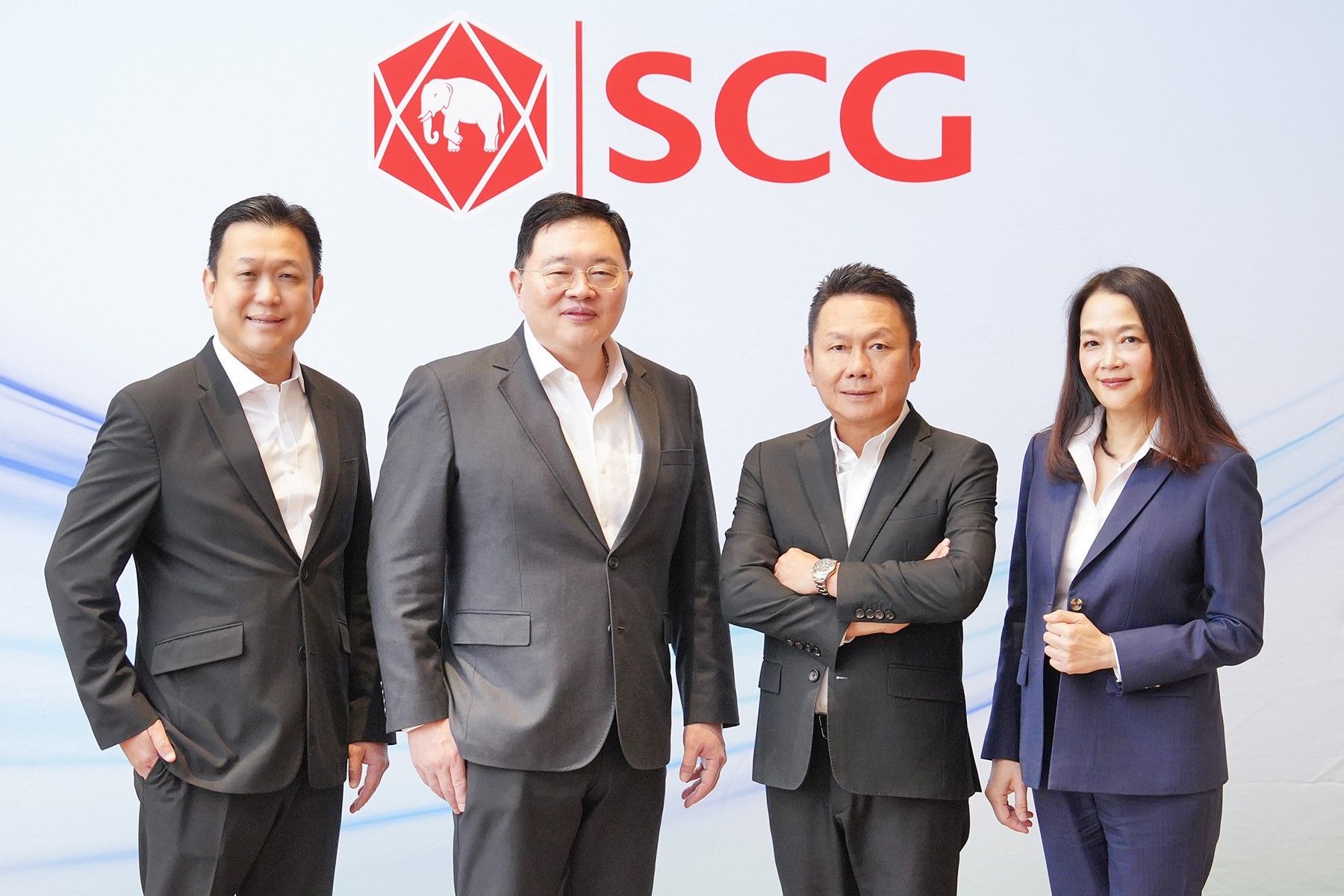
นายธรรมศักดิ์ เศรษฐอุดม กรรมการผู้จัดการใหญ่ เอสซีจี เปิดเผยว่า “ไตรมาส 1 ปี 2569 เอสซีจีมี Adjusted Cash EBITDA (กระแสเงินสดที่ไม่รวมการปรับปรุงมูลค่าสินค้าคงเหลือ การด้อยค่า และรายการที่ไม่เกิดขึ้นเป็นประจำของธุรกิจที่เป็นรายการที่ไม่ใช่เงินสด) 14,929 ล้านบาท แข็งแกร่งขึ้น 17% เมื่อเทียบกับช่วงเดียวกันของปีก่อน กำไรสำหรับงวด 6,223 ล้านบาท และรายได้จากการขายรวม 123,327 ล้านบาท แม้ความขัดแย้งในตะวันออกกลางจะกดดันให้ราคาพลังงานและวัตถุดิบผันผวน กระทบเศรษฐกิจโลก ไทย และหลายภาคธุรกิจ ซึ่งคาดว่าสถานการณ์นี้จะยืดเยื้อต่อ แต่การที่เอสซีจีตัดสินใจดำเนิน “กลยุทธ์เชิงรุก” อย่างทันท่วงทีตั้งแต่ระยะต้น ทำให้สามารถ ‘ตั้งรับแรงกระแทกจากความผันผวนได้ก่อน’ และ ‘คุมสถานการณ์ได้จริง’ ส่งผลให้การดำเนินธุรกิจมีเสถียรภาพและประสิทธิภาพต่อเนื่อง ทั้ง “แผนระยะสั้น” บริหารความเสี่ยงรอบด้านด้วยการตั้ง ‘Daily War Room’ ซึ่งทำหน้าที่เป็นศูนย์บัญชาการติดตามและบริหารต้นทุนวัตถุดิบ การบริหารต้นทุนพลังงาน ควบคู่การดูแลลูกค้าตลอดซัพพลายเชนอย่างใกล้ชิด รวมทั้งเดินหน้ารักษาวินัยทางการเงินเข้มข้น เพื่อสถานะการเงินบริษัทที่เข้มแข็ง ส่วน “แผนระยะ 2 ปี (2569-2570)” เอสซีจีมุ่งสร้างกล้ามเนื้อ ด้วยการบริหารความได้เปรียบจากการมีฐานผลิตหลากหลายในอาเซียน ผ่านการรวมศูนย์การผลิตและนำ Robotics & Automation มาใช้ยกระดับคุณภาพสินค้า พร้อมเดินหน้าโครงการ LSPE เวียดนาม ซึ่งคืบหน้า 54% ตามแผน ตลอดจนผลักดันสินค้ากรีน (Green Products) – สินค้าคุณภาพดี ราคาคุ้มค่า (Smart Value Products : SVP) – สินค้ามูลค่าเพิ่มสูง (High Value Added Products : HVA) และเร่งศึกษาความเป็นไปได้ในการร่วมทุนเชิงกลยุทธ์ของธุรกิจโอเลฟินส์และพอลิโอเลฟินส์ในไทยระหว่าง GC และ SCGC รวมทั้งขับเคลื่อนธุรกิจพลังงานสะอาดครบวงจร เพื่อธุรกิจและอุตสาหกรรมแข็งแกร่งระยะยาว”

สำหรับรายละเอียด “กลยุทธ์เชิงรุก” ดังกล่าว ประกอบด้วย “แผนระยะสั้น” เน้นปรับตัว ‘เข้มข้น’ ทันท่วงที โดย
1.) บริหารความเสี่ยงรอบด้านด้วยการตั้ง ‘Daily War Room’ รวมศูนย์ผู้มีอำนาจตัดสินใจทุกด้าน นำข้อมูลรายวันมาหาโซลูชันที่เป็นประโยชน์ต่อทั้งลูกค้าและธุรกิจ ไม่ว่าจะเป็นการบริหารต้นทุนวัตถุดิบ ด้วยการ ‘เร่งหาวัตถุดิบจากแหล่งอื่น’ ทั่วทุกมุมโลก ทั้งนี้ ยังให้ความสำคัญกับการดูแลลูกค้าตลอดซัพพลายเชน ให้ปรับตัวรับมือกับสถานการณ์นี้ไปด้วยกัน โดยเฉพาะการเดินหน้าส่งมอบสินค้าที่ลูกค้าไม่สามารถซื้อจากผู้ผลิตรายอื่นได้ เช่น สินค้ามูลค่าเพิ่มสูง
2.) บริหารต้นทุนพลังงาน เพื่อให้พร้อมรับมือหากเกิดวิกฤตน้ำมันขาดแคลน โดย ‘เพิ่มประสิทธิภาพการใช้พลังงานและใช้พลังงานทางเลือก’ และ ‘เพิ่มการใช้รถ EV ขนส่งสินค้า’ ประกอบกับ ‘การมีโรงงานผลิตสินค้ากระจายทั่วประเทศ’ ช่วยลดต้นทุนขนส่งได้ดี
3.) เดินหน้ารักษาวินัยทางการเงิน ‘เข้มข้น’ ซึ่งผลจากการปรับโครงสร้างการดำเนินงาน หยุดธุรกิจไม่ทำกำไรช่วงที่ผ่านมาทำให้ประหยัดค่าใช้จ่ายได้กว่า 4,300 ล้านบาทในปี 2569 ขณะที่เงินทุนหมุนเวียนเพิ่มขึ้น 2,438 ล้านบาท จากการเพิ่มขึ้นของสินค้าคงคลัง แต่ยังควบคุมเงินลงทุน (CAPEX) ได้ที่ 5,482 ล้านบาท ทำให้หนี้สินสุทธิลดลง 2,813 ล้านบาท อัตราส่วนหนี้สินสุทธิต่อ EBITDA อยู่ที่ 5.0 เท่า จากเดิม 5.5 เท่า สถานะการเงินมั่นคงและแข็งแกร่ง โดยมีเงินสดคงเหลือ ณ สิ้นไตรมาส 67,137 ล้านบาท

สำหรับ “แผนระยะ 2 ปี” (2569-2570) เน้น ‘สร้างกล้ามเนื้อ’ ยกระดับความสามารถการแข่งขัน เพื่อธุรกิจและอุตสาหกรรม ‘แข็งแกร่ง’ ในระยะยาว โดย
1.) บริหารความได้เปรียบจาก ‘การมีฐานผลิตหลากหลายในอาเซียน’ (Regional Optimization) ซึ่งมีแนวโน้มเติบโต ด้วยการ ‘รวมศูนย์การผลิต’ และ ‘ใช้ Robotics & Automation’ ยกระดับประสิทธิภาพการผลิตและคุณภาพสินค้า รวมทั้งการ ‘บริหารต้นทุนพลังงานและวัตถุดิบ’ คาดว่าช่วยลดต้นทุนทั่วอาเซียนได้ปีละกว่า 3,300 ล้านบาท ส่วน ‘โครงการ LSPE’ เพิ่มความยืดหยุ่นในการใช้วัตถุดิบก๊าซอีเทนที่โรงงาน Long Son Petrochemicals (LSP) ประเทศเวียดนาม เมื่อเริ่มดำเนินการปลายปี 2570 ตามแผน คาดว่าช่วยลดต้นทุนได้ปีละกว่า 6,000 ล้านบาท
2.) ผลักดัน ‘สินค้ากรีน – สินค้าคุณภาพดี ราคาคุ้มค่า – สินค้ามูลค่าเพิ่มสูง’ เพื่อตอบโจทย์ความต้องการที่หลากหลายของลูกค้า พร้อมเพิ่มอัตราส่วนของกำไรต่อรายได้ให้ธุรกิจ
3.) เร่งศึกษาความเป็นไปได้ในการร่วมทุนเชิงกลยุทธ์ของธุรกิจโอเลฟินส์และพอลิโอเลฟินส์ในไทยระหว่าง GC และ SCGC โดยได้ประกาศการลงนามในบันทึกข้อตกลงเบื้องต้นซึ่งไม่มีผลผูกพันทางกฎหมาย เพื่อเสริมสร้างความมั่นคงของซัพพลายเชน และเพิ่มความสามารถในการแข่งขันของอุตสาหกรรมปิโตรเคมีและอุตสาหกรรมต่อเนื่องในประเทศไทย ด้วยโครงสร้างพื้นฐานครบวงจร เพื่อเพิ่มขีดความสามารถทางการแข่งขันในระดับโลก ทั้งนี้ ผลการศึกษาการร่วมทุนดังกล่าวจะขึ้นอยู่กับผลของการตรวจสอบสภาพกิจการ (due diligence) และการได้รับอนุมัติของบริษัททั้งสองและจากหน่วยงานกำกับดูแลที่เกี่ยวข้อง รวมถึงคณะกรรมการการแข่งขันทางการค้า (หากต้องขออนุญาต) คาดว่าการศึกษาจะแล้วเสร็จภายในไตรมาส 3 ปี 2569 โดยระหว่างนี้ ทั้งสองบริษัทยังคงดำเนินธุรกิจตามปกติอย่างเป็นอิสระต่อกัน
4.) ขับเคลื่อนธุรกิจพลังงานสะอาดครบวงจร ‘SCG Cleanergy’ ตอบโจทย์ความต้องการพลังงานทางเลือกของลูกค้า เพื่อลดต้นทุนและความผันผวนจากการใช้เชื้อเพลิงฟอสซิล พร้อมมุ่งสู่เป้าหมาย Net Zero

ทั้งนี้ ผลประกอบการและการดำเนินงานสำคัญในไตรมาส 1 ปี 2569 รายธุรกิจ มีดังนี้
1.) ธุรกิจที่เกี่ยวข้องกับซีเมนต์และผลิตภัณฑ์ก่อสร้าง ได้แรงหนุนจากตลาดในภูมิภาคอาเซียนและโครงการภาครัฐ
- เอสซีจี ซีเมนต์แอนด์กรีนโซลูชันส์ กำไร 2,136 ล้านบาท
o เร่งขยาย “ปูนเอสซีจีคาร์บอนต่ำ” เข้าถึงตลาดในประเทศกว่า 80% พร้อมส่งออกต่างประเทศต่อเนื่อง
o มุ่งพัฒนาสินค้า HVA ยกระดับคุณภาพงานก่อสร้าง ลดระยะเวลาการทำงาน เพิ่มความทนทาน เพื่อเพิ่มคุณค่าให้ลูกค้าระยะยาวตามความเหมาะสมของพื้นที่ เช่น กลุ่มสินค้า CPAC Super, Extras และ Advance Series “คอนกรีตซูเปอร์ชายเล ซีแพค” และ “คอนกรีตเอ็กซ์ตร้า มารีน ซีแพค” สำหรับภาคใต้ ตะวันออก และตะวันตก ป้องกันโครงสร้างสิ่งปลูกสร้างใกล้ชายฝั่งทะเล และ “คอนกรีตเอ็กซ์ตร้า ทนดินเค็ม ซีแพค” สำหรับภาคอีสาน ซึ่งเป็นพื้นที่ดินเค็ม
o ใช้พลังงานทางเลือก ทั้งเชื้อเพลิงชีวมวล เชื้อเพลิงจากขยะ และพลังงานหมุนเวียนในกระบวนการผลิต ลดต้นทุนได้กว่า 444 ล้านบาท
o ใช้รถไฟฟ้า EV Mining Truck ในเหมืองปูนซีเมนต์เป็นรายแรกของไทย และทดลองขนส่งคอนกรีตผสมเสร็จด้วยรถโม่พลังงานไฟฟ้า CPAC EV Mixer Truck ให้ลูกค้าในพื้นที่ภาคกลาง
- เอสซีจี สมาร์ทลีฟวิง และ เอสซีจี ดิสทริบิวชั่นแอนด์รีเทล กำไร 804 ล้านบาท
o เร่งผลักดันสินค้า SVP ที่ตอบโจทย์กำลังซื้อผู้บริโภค สร้างรายได้กว่า 993 ล้านบาท จากกลุ่มสินค้าหลังคา บอร์ด ไม้สังเคราะห์ ฉนวนกันความร้อน และกระเบื้องซีเมนต์ปูพื้น
o มุ่งพัฒนาสินค้า HVA ที่มีคุณสมบัติพิเศษ เช่น “กระเบื้องซีเมนต์ปูพื้น เอสซีจี รุ่นคอมฟอร์ท” ซึ่งลดการสะสมความร้อนบนแผ่นกระเบื้อง “ระบบหลังคากันความร้อน เอสซีจี” โซลูชันลดความร้อนเข้าสู่บ้าน และ “หลังคาเซรามิก เอสซีจี รุ่นเซลิกา ศรา” ที่ราคาคุ้มค่าและได้กระแสตอบรับดี
o เพิ่มประสิทธิภาพและลดต้นทุนการผลิตต่อเนื่อง ด้วย Lean Automation, AI และใช้วัตถุดิบทดแทนที่มีคุณภาพในการผลิต แต่ยังคงคุณภาพสินค้าได้ตามมาตรฐาน
- เอสซีจี เดคคอร์ กำไร 247 ล้านบาท เน้นเดินหน้ากลยุทธ์ Regional optimization เพิ่มศักยภาพการแข่งขันระยะยาว ผ่าน ‘โครงการเพิ่มกำลังการผลิตกระเบื้องเกลซพอร์ซเลน ในเวียดนาม’ เตรียมพร้อมเป็นฐานการผลิตและส่งออกหลักในภูมิภาค อีกทั้ง ‘โครงการรวมศูนย์การผลิตกระเบื้องเซรามิกและเกลซพอร์ซเลน และเพิ่มสายการผลิตกระเบื้องเกลซพอร์ซเลนใหม่ในไทย’ เพื่อลดต้นทุนการผลิต ทำกำไร และแข่งขันกับสินค้านำเข้าจากต่างประเทศได้ดียิ่งขึ้น
2.) ธุรกิจเคมิคอลส์ สถานการณ์ตะวันออกกลางส่งผลให้วัตถุดิบขาดแคลน และมีราคาสูงขึ้น ผู้ผลิตในเอเชียและตะวันออกกลางลดกำลังการผลิตและอัตราการเดินเครื่องจักรราว 46 ล้านตัน หรือประมาณ 20% ของกำลังการผลิตเอทิลีน ทำให้อุปทานในตลาดลดลง ด้วยปัจจัยด้านต้นทุนและอุปทานดังกล่าว ส่งผลให้ราคาพอลิเอทิลีน (PE) และพอลิโพรพิลีน (PP) ในตลาดโลกปรับตัวสูงขึ้น
- เอสซีจีซี กำไร 1,078 ล้านบาท สาเหตุหลักจากการปรับมูลค่าสินค้าคงเหลือทางบัญชี ส่วนต่างราคาปิโตรเคมีสูงขึ้น และส่วนแบ่งกำไรของบริษัทร่วมเพิ่มขึ้น โดยเอสซีจีซีเร่งเดินหน้าปรับกลยุทธ์ต่อเนื่องเพื่อรับมือความผันผวนของการนำเข้าวัตถุดิบจากตะวันออกกลาง โดยให้ความสำคัญกับการจัดหาวัตถุดิบจากแหล่งอื่น ๆ ที่ไม่อยู่ในตะวันออกกลาง การบริหารจัดการวัตถุดิบและแผนการผลิตให้มีประสิทธิภาพสูงสุด พร้อมมุ่งส่งมอบสินค้าโดยให้ความสำคัญกับลูกค้าในประเทศเป็นลำดับแรก เพื่อลดผลกระทบในห่วงโซ่อุปทานให้น้อยที่สุด ควบคู่การผลักดันสินค้า HVA สู่ตลาดเพื่อเพิ่มความสามารถในการแข่งขันในระยะยาว อย่างไรก็ตาม แม้ล่าสุดจะมีความจำเป็นต้องหยุดการเดินโรงงาน LSP ในเวียดนาม ชั่วคราวเพิ่มเติม หลังจากหยุดการเดินโรงงาน ROC ในไทย ชั่วคราวไปก่อนหน้านี้จากการจัดหาวัตถุดิบที่มีข้อจำกัด เอสซีจีซีจะใช้เวลาดังกล่าวดำเนินการซ่อมบำรุงและเร่งเตรียมความพร้อมสำหรับโครงการเพิ่มวัตถุดิบก๊าซอีเทนที่โรงงาน LSP ซึ่งล่าสุดคืบหน้า 54% ให้โรงงานและเครื่องจักรพร้อมเริ่มดำเนินการปลายปี 2570 ตามแผน เพื่อสนับสนุนการสร้างขีดความสามารถทางการแข่งขันในระยะยาวให้ธุรกิจต่อไป ทั้งนี้ นอกจากการหยุดเดินโรงงานชั่วคราว 2 แห่ง (LSP และ ROC) การดำเนินงานของโรงงานในกลุ่มธุรกิจเคมิคอลส์อื่น ๆ ยังดำเนินการตามปกติ อีกทั้งยังอยู่ระหว่างเร่งศึกษาความเป็นไปได้ในการร่วมทุนเชิงกลยุทธ์ของธุรกิจโอเลฟินส์และพอลิโอเลฟินส์ในไทยระหว่าง GC และ SCGC
3.) ธุรกิจแพคเกจจิ้ง กลุ่มสินค้าอุปโภคบริโภคในกลุ่มอาเซียนและการส่งออกยังคงดีต่อเนื่อง
- เอสซีจีพี กำไร 1,566 ล้านบาท จากธุรกิจในอินโดนีเซียที่ฟื้นตัวจากการเพิ่มประสิทธิภาพการดำเนินงานและลดต้นทุน และจากแรงหนุนของการอุปโภคบริโภคในประเทศกลุ่มอาเซียน โดยเอสซีจีพีมุ่งเพิ่มสัดส่วนรายได้บรรจุภัณฑ์เพื่อผู้บริโภคในอาเซียนซึ่งเป็นตลาดหลักและดำเนินธุรกิจโดยยึดลูกค้าเป็นศูนย์กลาง (Customer Centricity) และเดินหน้าบริหารความต่อเนื่องทางธุรกิจ ควบคู่กับการเพิ่มประสิทธิภาพการผลิตและการปรับการใช้พลังงานอย่างเหมาะสม
4.) ธุรกิจพลังงานสะอาด
- เอสซีจี คลีนเนอร์ยี่ มีกำลังการผลิตสะสมของโครงการที่เปิดดำเนินการแล้วรวม 141 เมกะวัตต์ จากการบริหารจัดการเชิงรุก โดยปรับกระบวนการพัฒนาโครงการให้กระชับและรวดเร็วยิ่งขึ้น ส่งผลให้สามารถเปิดดำเนินการเชิงพาณิชย์ของโครงการขนาดใหญ่ได้ตามแผน อาทิ โครงการซื้อขายไฟฟ้ากับภาครัฐ (CMT1) รวมถึงโครงการซื้อขายไฟฟ้ากับภาคเอกชนอย่างบริษัท ซีเกท เทคโนโลยี ประเทศไทย จำกัด นอกจากนี้ ยังพัฒนาโครงการที่อยู่ระหว่างดำเนินการต่อเนื่อง เพื่อรักษาอัตราการเติบโตให้เป็นไปตามเป้าหมายที่วางไว้

“แม้ความผันผวนทั้งในตะวันออกกลางและภาพรวมเศรษฐกิจยังคงอยู่ในระดับสูง เอสซีจีจะยังเดินหน้ารักษาวินัยการเงินอย่าง ‘เข้มข้น’ และ เร่ง ‘เสริมแกร่ง’ ขีดความสามารถทางการแข่งขันของทุกธุรกิจให้ ‘เข้มแข็ง’ ตลอดจนติดตามสถานการณ์ความผันผวนต่างๆ อย่างใกล้ชิด พร้อมปรับตัวเชิงรุกทุกด้านให้พร้อมสู้ทุกความท้าทาย มั่นใจว่าสถานะทางการเงินบริษัทฯ ยัง ‘แข็งแกร่ง’ มีเงินสดในมือเพียงพอ และสามารถเติบโตในระยะยาวได้ต่อไป” กรรมการผู้จัดการใหญ่ เอสซีจี กล่าวปิดท้าย
SCG Announces Stronger Q1/2026 Results, Up 17% YoY,
Navigates Middle East Crisis with Cost Control, Regional Optimization, Driving Green, Smart Value and High Value-Added Products, and Accelerates the Feasibility Study for a strategic joint venture in the olefins and polyolefins business in Thailand between GC and SCGC to Build Long-Term Strength
BANGKOK: 30 April 2026 – SCG announced its Q1/2026 operating results, highlighting an Adjusted Cash EBITDA of 14,929 MB, a robust increase of 17% YoY. SCG anticipates that the situation in the Middle East will continue to slow down the global economy and lead to continued volatility in energy and raw material prices. In response, SCG is accelerating its “short-term strategy” by actively managing raw material and energy costs, while continuously supporting customers through the implementation of a Daily War Room to enable timely and effective responses. At the same time, SCG is reinforcing strict financial discipline. For its “two-year strategy” (2026–2027), SCG is focused on building long-term resilience by leveraging its diversified manufacturing footprint across ASEAN, adopting Robotics and Automation, advancing the LSPE project in Vietnam, with 54% progress achieved, in line with plan, driving Green, SVP, and HVA products, accelerates the feasibility study for a strategic joint venture in the olefins and polyolefins business in Thailand between GC and SCGC, and advancing its clean energy business.

Thammasak Sethaudom, President and CEO of SCG, said, “In Q1/2026, SCG reported Adjusted Cash EBITDA (cash flow excluding inventory adjustment, impairment, and non-recurring items of business which are non-cash) of 14,929 MB, representing a strong increase of 17% YoY. Profit for the period was 6,223 MB, with total revenue from sales of 123,327 MB. Despite the impact of tensions in the Middle East, which have driven volatility in energy and raw material prices and affected the global economy, Thailand, and multiple industries, and are expected to persist, SCG’s early and proactive strategic decisions have enabled the company to ‘absorb the impact of volatility’ and ‘effectively manage the situation’. As a result, business operations have remained stable and efficient. Under its “short-term strategy”, SCG is managing risks comprehensively through the establishment of a ‘Daily War Room,’ which serves as a command center for closely monitoring and managing raw material and energy costs on a daily basis, alongside continuous customer support across the supply chain. In addition, SCG continues to maintain strict financial discipline to ensure a strong financial position. For its “two-year strategy” (2026–2027), SCG is strengthening its long-term competitiveness by leveraging the advantages of its diversified manufacturing base across ASEAN (Regional Optimization), consolidating production, and applying robotics and automation to enhance product quality. SCG is also advancing the LSPE project in Vietnam, which has progressed 54% as planned, while driving Green, SVP (Smart Value Products), and HVA (High Value-Added) products, accelerating the feasibility study for a strategic joint venture in the olefins and polyolefins business in Thailand between GC and SCGC, and advancing its integrated clean energy business to ensure long-term strength for its businesses and the industry.”

The proactive strategy comprises a “short-term strategy” focusing on intensive and timely adaptation, as follows:
1.) Managing risks comprehensively through the establishment of a ‘Daily War Room,’ which centralizes decision-makers from all functions to leverage data to develop solutions that benefit both customers and the business. This encompasses managing raw material costs by expediting the sourcing of raw materials from alternative sources worldwide. Furthermore, SCG places significant importance on supporting customers throughout the supply chain, enabling them to adapt to and navigate this situation together, particularly by ensuring the continuous delivery of products that cannot be sourced from other manufacturers, such as High Value-Added Products (HVA).

2.) Managing energy costs to prepare for potential oil supply shortages by ‘enhancing energy efficiency and increasing the use of alternative energy,’ as well as ‘increasing the use of EV vehicles for product transportation.’ In addition, having manufacturing facilities distributed nationwide helps effectively reduce transportation costs.
3.) Maintaining ‘strict’ financial discipline. Operational restructuring and the discontinuation of non-profitable businesses in recent periods have resulted in cost savings of approximately 4,300 MB in 2026. Meanwhile, working capital increased by 2,438 MB due to higher inventory levels; however, capital expenditure (CAPEX) remained well controlled at 5,482 MB. As a result, net debt decreased by 2,813 MB, with the net debt-to-EBITDA ratio improving to 5.0 times from 5.5 times. It maintains a strong and stable financial position, with cash on hand totaling 67,137 MB at the end of the quarter.
For its two-year strategy (2026–2027), SCG focuses on “building strength” to enhance competitiveness and ensure long-term resilience across its businesses and the industry, as follows:

1.) Leveraging the advantages of a diversified manufacturing base across ASEAN (Regional Optimization), which continues to show growth potential. This is achieved through production consolidation and the adoption of robotics and automation to enhance production efficiency and product quality, alongside the effective management of energy and raw material costs. These initiatives are expected to reduce costs across ASEAN by over 3,300 MB per year. In addition, the LSPE project will enhance flexibility in the utilization of ethane feedstock at the Long Son Petrochemicals (LSP) complex in Vietnam. Upon commencement of operations as planned by the end of 2027, the project is expected to deliver cost savings of more than 6,000 MB annually.
2.) Driving Green Products, Smart Value Products (SVP), and High Value Added Products (HVA) to meet diverse customer needs, while improving the profit-to-revenue ratio across the business.
3.) Accelerating the feasibility study for a strategic joint venture of the olefins and polyolefins businesses in Thailand between GC and SCGC, following the signing of a preliminary and non-binding Memorandum of Understanding (MoU) to explore such collaboration. The initiative aims to strengthen the security of the supply chain and enhance the competitiveness of Thailand’s petrochemical and related industries, leveraging integrated infrastructure to further enhance global competitiveness. The outcome of the study will be subject to due diligence and the receipt of approvals from both companies and relevant regulatory authorities, including the Trade Competition Commission of Thailand (if required). The evaluation is expected to be completed within Q3/2026. During this period, both companies will continue to operate independently in the ordinary course of business.
4.) Advancing the integrated clean energy business, ‘SCG Cleanergy,’ to meet customers’ demand for alternative energy solutions, reduce costs and exposure to fossil fuel price volatility, and progress toward the net zero target.
The key operating results and highlights for Q1/2026 by business unit are as follows:
1.) Cement and Construction Materials Businesses were supported by growth in ASEAN markets and government infrastructure projects.
- SCG Cement and Green Solutions reported a profit of 2,136 MB.
o Accelerated the growth of “SCG Low Carbon Cement”, expanding domestic market penetration to over 80%, while continuing exports to international markets.
o Focused on the development of High Value Added Products (HVA) to enhance construction quality, reduce construction time, and improve durability, delivering long-term value to customers tailored to specific regional requirements. Examples include CPAC Super / Extras and Advance Series, such as “CPAC Super Coastal Concrete” and “CPAC Extra Marine Concrete” for southern, eastern, and western regions, designed to protect structures in coastal environments, as well as “CPAC Extra Saline Soil Resistance Concrete” for the northeastern region, where saline soil conditions prevail.
o Increased the use of alternative energy, including biomass fuels, refuse-derived fuels, and renewable energy in production processes, resulting in cost savings of over 444 MB.
o Deployed EV Mining Trucks in cement quarries, marking the first such implementation in Thailand, and and piloting the use of electric mixer trucks (CPAC EV Mixer Truck) for ready-mix concrete delivery to customers in the central region..

- SCG Smart Living and SCG Distribution & Retail reported a profit of 804 MB.
o Accelerated the growth of SVP that align with consumer purchasing power, generating revenue of over 993 MB from product categories such as roofing, boards, wood substitutes, thermal insulation, and cement floor tiles.
o Focused on developing HVA with enhanced performance features, such as “SCG Comfort Pavement Tile,” which reduces heat accumulation on surfaces; “SCG Heat Insulation Roofing System,” a solution designed to reduce heat entering homes; and “SCG Celica Zera Ceramic Roof,” which offers strong value for money and has received positive market response.
o Enhanced production efficiency and reduced costs through the adoption of Lean Automation, AI, and the use of quality alternative raw materials, while maintaining product quality standards.
- SCG Decor reported a profit of 247 MB, focusing on advancing its Regional Optimization strategy to strengthen long-term competitiveness. This includes the expansion of glazed porcelain tile production capacity in Vietnam, preparing it to serve as a key manufacturing and export hub in the region, as well as the consolidation of ceramic and glazed porcelain tile production and the addition of new glazed porcelain tile production lines in Thailand, aimed at reducing production costs, improving profitability, and enhancing competitiveness against imported products
2.) Chemicals Business. The situation in the Middle East have resulted in raw material shortages and higher costs. Producers in Asia and the Middle East have reduced production capacity and operating rates by approximately 46 million tons, or around 20% of total ethylene capacity, resulting in reduced market supply. As a result of these cost and supply factors, global prices of polyethylene (PE) and polypropylene (PP) have increased.
- SCGC reported a profit of 1,078 MB, primarily driven by accounting inventory revaluation gains, improved petrochemical spreads, and higher equity income from associates. SCGC continues to proactively adjust its strategy to manage volatility in raw material imports from the Middle East, with a strong focus on sourcing feedstock from alternative regions outside the Middle East, optimizing raw material management and production planning for maximum efficiency, and prioritizing domestic customers to minimize supply chain impacts. At the same time, SCGC continues to drive HVA to enhance long-term competitiveness. However, due to constraints in raw material supply, SCGC has recently undertaken additional temporary shutdowns of the Long Son Petrochemicals (LSP) complex in Vietnam, following the earlier temporary shutdown of the Rayong Olefins (ROC) plant in Thailand. During this period, SCGC is carrying out maintenance and accelerating preparations for the ethane feedstock enhancement project at the LSP complex, which has now reached 54% completion. The project remains on track for operations by the end of 2027, to further support long-term competitiveness. Aside from these temporary shutdowns at LSP and ROC, operations at other plants within the Chemicals Business continue to operate as normal. In addition, SCGC is accelerating the feasibility study for a strategic joint venture in the olefins and polyolefins business in Thailand between GC and SCGC.

3.) Packaging Business. Demand for consumer packaging in ASEAN and export markets remains and continues to grow.
- SCGP reported a profit of 1,566 MB, driven by the recovery of operations in Indonesia following efficiency improvements and cost reductions, as well as continued growth in domestic consumption across ASEAN markets. SCGP is focused on increasing the proportion of consumer packaging revenue in ASEAN, its core market, while operating under a customer-centric approach (Customer Centricity). It also continues to ensure business continuity, alongside enhancing production efficiency and optimizing energy usage appropriately.
4.) Clean Energy Business
- SCG Cleanergy reported total installed capacity of 141 megawatts from projects already in operation. Through proactive management, it has streamlined project development processes to be more efficient and faster, enabling large-scale projects to commence commercial operations as planned. These include power purchase agreements with the public sector (CMT1), as well as private sector partnerships such as with Seagate Technology (Thailand) Co., Ltd. In addition, SCG Cleanergy continues to advance projects under development to maintain growth in line with its targets.
“Despite continued high volatility in both the Middle East and the global economic landscape, SCG will maintain ‘strict’ financial discipline and ‘accelerate efforts’ to ‘strengthen’ the competitiveness of all businesses to be ‘resilient’. SCG will closely monitor evolving conditions and continue to proactively adapt across all areas to navigate challenges effectively. SCG remains confident in its ‘strong’ financial position, with sufficient cash on hand and the ability to sustain long-term growth,” said Thammasak, President and CEO of SCG.
